Define batch and replicate levels correctly.
Descriptive and graphical comparison
Modelling & Data · Data Analysis
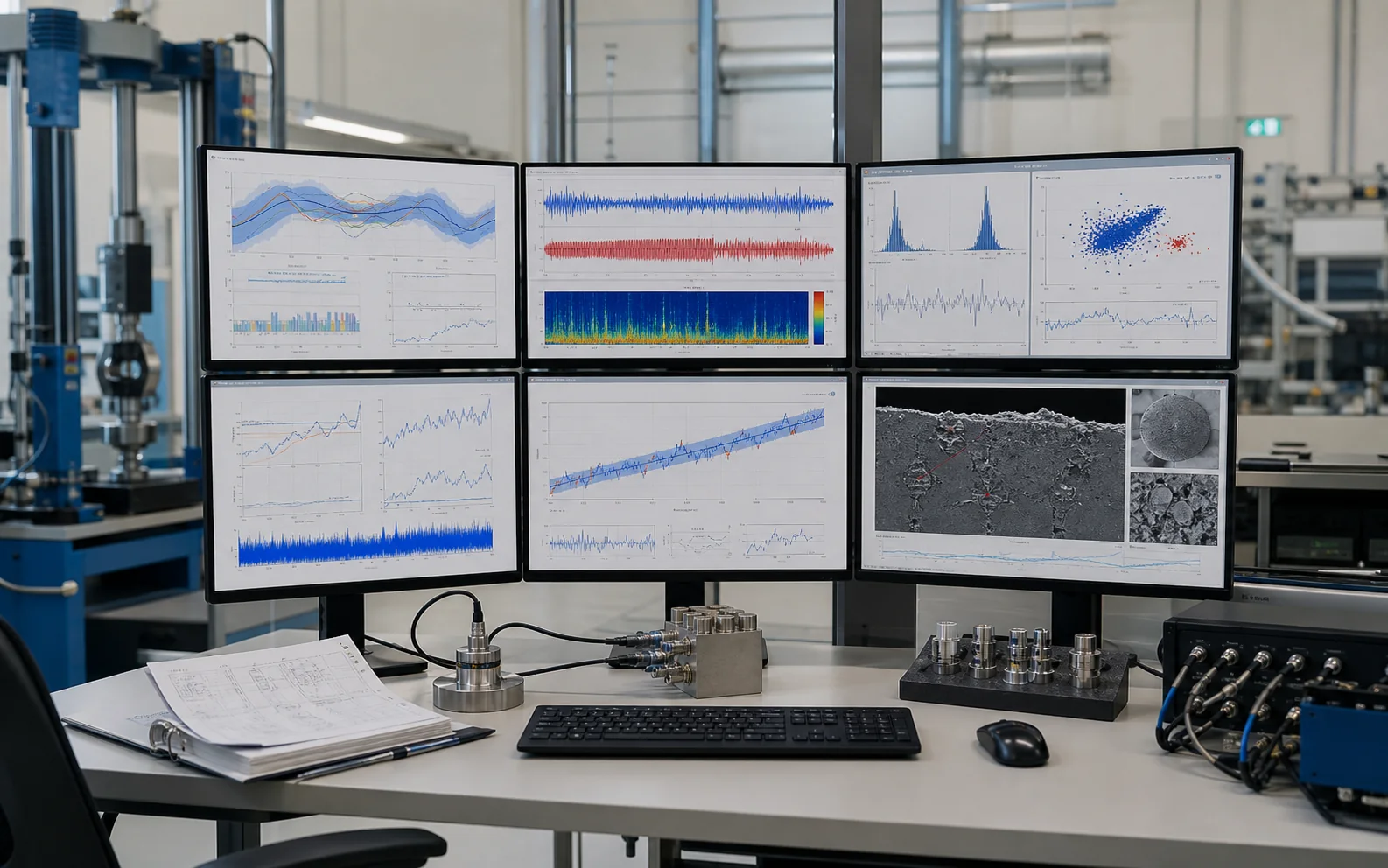
Batch comparison separates between-batch shifts from within-batch variability while respecting replicate, instrument, operator, and time structure. The aim is to identify meaningful process differences rather than rank batches…
Why this service
Batch comparison separates between-batch shifts from within-batch variability while respecting replicate, instrument, operator, and time structure. The aim is to identify meaningful process differences…
Descriptive and graphical comparison
ANOVA or mixed-effects modelling
Equivalence, capability, or drift review
Choose the scope
The method, preparation route and reporting depth depend on what you need to decide.
Define batch and replicate levels correctly.
Separate process shift from measurement noise.
Identify whether more sampling is needed.
Common outputs
Fields, conditions, processing and file formats are confirmed before work begins.
A representative output from Batch Comparison with agreed units, labels, and revision status.
Checks, tolerances, convergence, uncertainty, or inspection evidence appropriate to the service.
A concise interpretation connecting the deliverable to the customer decision.
Input requirements
Provide representative, clearly labelled inputs and identify the decision, feature or comparison that matters.
| Suitable input | Submission requirement | Planning note |
|---|---|---|
| Project input or design file | Provide the current design, objective, constraints and required deliverables for technical review. | Declare confidentiality, file, access or delivery constraints in advance. |
Objective: state the decision, comparison or acceptance criterion the work must support.
Handling and access: declare hazards, instability, confidentiality, file constraints or special logistics before dispatch or transfer.
Questions and answers
Short answers to issues that can change preparation, scope, timing or interpretation.
Raw, unedited data in a machine-readable format; preserve original files and metadata.
Start with Descriptive and graphical comparison; the final option is confirmed against the required decision and acceptance criteria.
Typical outputs include batch effect estimates, within-batch variability, outlier and drift findings. Final files follow the confirmed reporting scope.
Delivery timing is confirmed after the project inputs, scope and dependencies have been reviewed.
Request a project quotation