Major and minor elemental composition
Major and minor elemental composition
Material Analysis · Composition & Elemental
ICP-OES elemental analysis using optical emission, with target elements, concentration range, matrix and sample preparation agreed before quotation.
Why this service
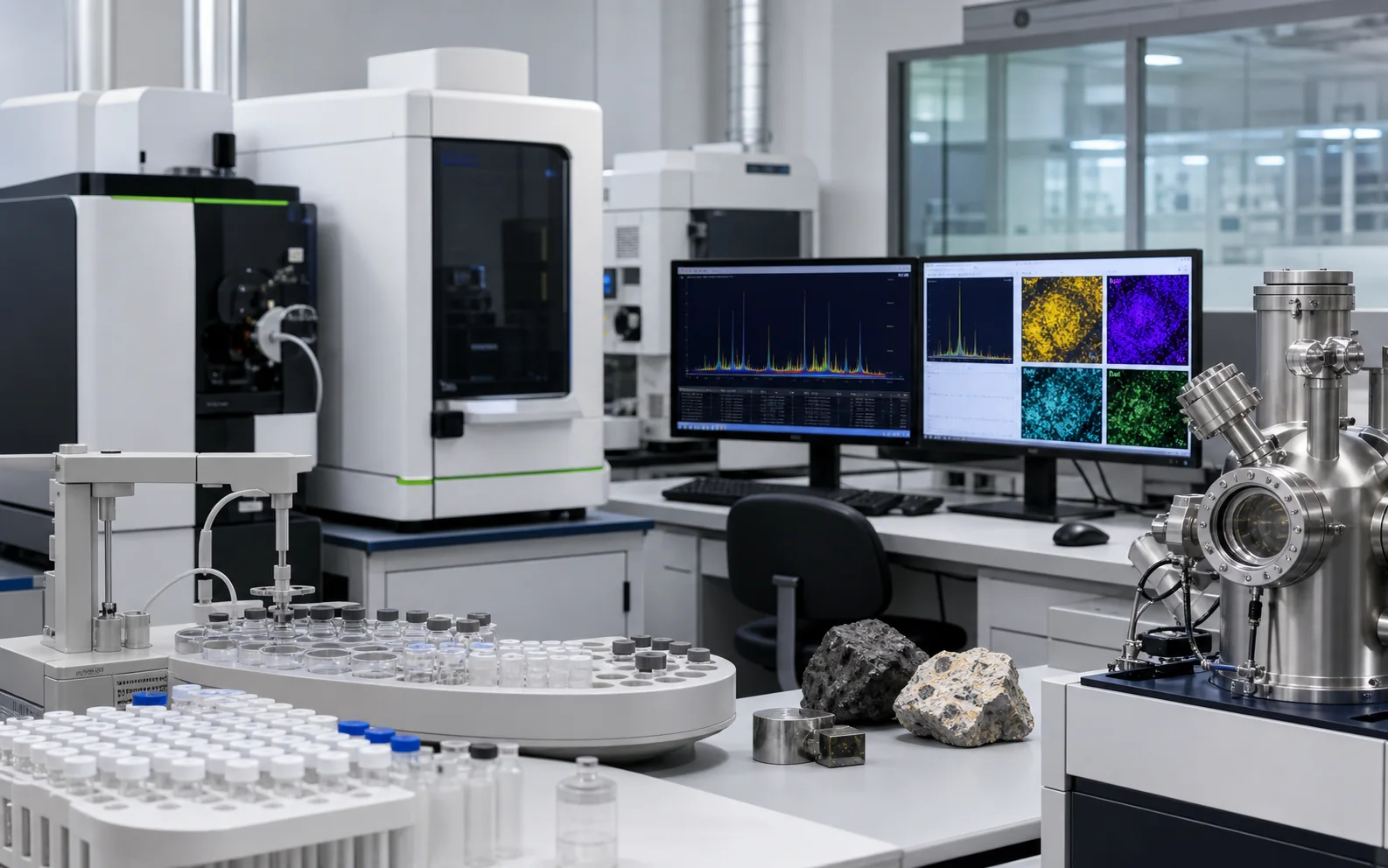
ICP-OES measures element-specific optical emission from a plasma. Major and minor elemental questions are scoped around expected concentrations, spectral overlap, matrix loading and dilution.
Major and minor elemental composition
Optical emission and matrix review
Matched composition comparison
Choose the scope
The method, preparation route and reporting depth depend on what you need to decide.
Major and minor elemental composition
Optical emission and matrix review
Matched composition comparison
Common outputs
Fields, conditions, processing and file formats are confirmed before work begins.
Agreed elemental concentration table reported with the agreed units, sample reference and measurement conditions.
Emission-line and reporting-limit record supplied in a labelled format suitable for direct sample or condition comparison.
Preparation and dilution record provided with the processing basis and quality checks agreed during technical review.
Calibration and quality-control record included when selected in the confirmed reporting scope.
Sample requirements
Provide representative, clearly labelled samples and identify the decision, feature or comparison that matters.
| Suitable sample | Submission requirement | Planning note |
|---|---|---|
| Solutions and digests | List target elements, expected concentrations, reporting limits and units. | Reporting limits depend on the element, matrix, preparation and accepted method; no universal detection limit is promised. |
| Solids requiring agreed dissolution | State the sample matrix, supplied amount, acid or solvent, and whether digestion is required. | Digestion, element count and specialist preparation require review. Laser ablation, LC coupling and single-particle work are separate services. |
| Solutions and digests | Agree preparation, contamination controls and reporting basis before sending samples. | Reporting limits depend on the element, matrix, preparation and accepted method; no universal detection limit is promised. |
Objective: state the decision, comparison or acceptance criterion the work must support.
Handling and access: declare hazards, instability, confidentiality, file constraints or special logistics before dispatch or transfer.
Questions and answers
Short answers to issues that can change preparation, scope, timing or interpretation.
No. The accepted reporting limits depend on emission lines, matrix, dilution and preparation.
Provide target concentrations and limits. The laboratory checks whether optical emission meets the question before confirming the method and quotation.
Configure the service
A £45 service fee applies to orders under £300, excluding VAT.
Typical turnaround: 8–12 working days
Configure & Book