3D elemental and isotopic distribution
laser or voltage pulsing
Material Analysis · Structure & Spectroscopy
Characterise 3D elemental and isotopic distribution, segregation, clustering, and interface chemistry, and nanoscale composition with near-atomic spatial resolution using a scope agreed around your sample and decision.
Why this service
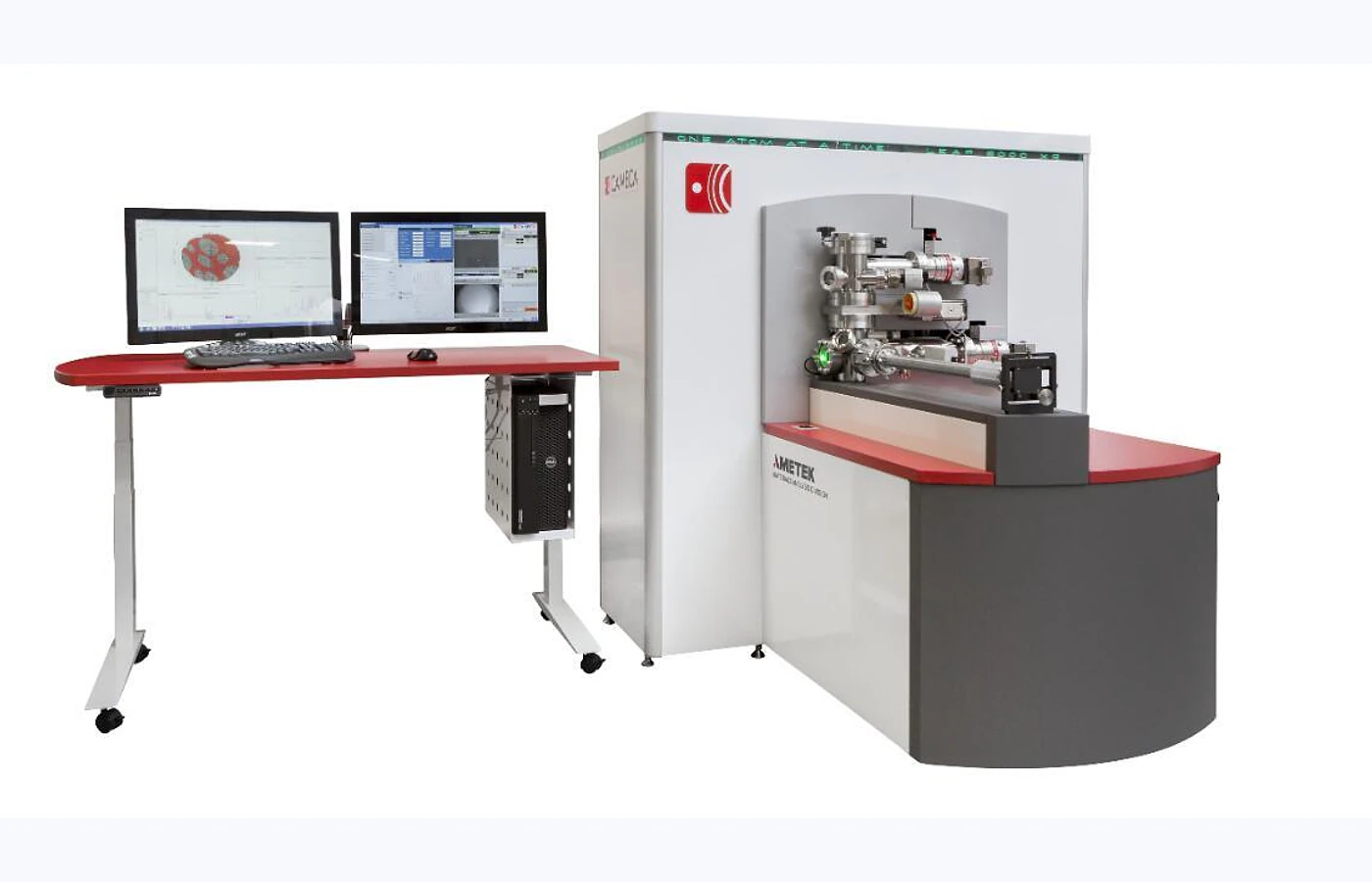
Three-Dimensional Atom Probe Tomography is selected when the project needs defensible information on 3D elemental and isotopic distribution, segregation, clustering, and interface chemistry, or nanoscale…
laser or voltage pulsing
site-specific correlative preparation
cryo-transfer APT
Choose the scope
The method, preparation route and reporting depth depend on what you need to decide.
3D elemental and isotopic distribution
segregation, clustering, and interface chemistry
nanoscale composition with near-atomic spatial resolution
Common outputs
Fields, conditions, processing and file formats are confirmed before work begins.
Reconstructed 3D atom map reported with the agreed units, sample reference and measurement conditions.
Composition profiles and proximity histograms supplied in a labelled format suitable for direct sample or condition comparison.
Cluster, interface, or precipitate statistics provided with the processing basis and quality checks agreed during technical review.
Method-specific images included when selected in the confirmed reporting scope.
Sample requirements
Provide representative, clearly labelled samples and identify the decision, feature or comparison that matters.
| Suitable sample | Submission requirement | Planning note |
|---|---|---|
| Film / coating | Provide the coated substrate or a flat film with the test surface and coating side clearly marked. | State the substrate, nominal thickness and whether sectioning or mounting is permitted. |
| Liquid / solution | Provide a sealed, compatible container labelled with composition, concentration and solvent. | Declare volatility, corrosivity, suspended solids and any storage or temperature requirement. |
| Device / assembly | Provide a complete labelled device or assembly with drawings, interfaces and operating limits. | Confirm power, connections, operating state, access restrictions and permitted disassembly. |
| Solid / component | Provide a clean, stable and clearly labelled specimen with the target face or region identified. | Confirm dimensions, cutting permission and whether the original geometry must be preserved. |
Objective: state the decision, comparison or acceptance criterion the work must support.
Handling and access: declare hazards, instability, confidentiality, file constraints or special logistics before dispatch or transfer.
Questions and answers
Short answers to issues that can change preparation, scope, timing or interpretation.
Provide film / coating, liquid / solution, device / assembly, solid / component as applicable. Exact quantity, dimensions and preparation are confirmed during technical review.
Choose the mode around the decision you need to make. For 3D elemental and isotopic distribution, start with laser or voltage pulsing; add site-specific correlative preparation when comparison or quantification is required.
Typical turnaround is 10 working days after sample acceptance and method confirmation.
Specimen yield and reconstruction accuracy are material-dependent. The analysed volume is extremely small and may not represent heterogeneous bulk material.
Configure the service
A £45 service fee applies to orders under £300, excluding VAT.
Typical turnaround: 10 working days
Configure & Book