What are the dielectric constant and loss over the required frequency…
Room-temperature frequency sweep
Performance Testing · Electrical & Electrochemical
Measure permittivity, dielectric loss and conductivity across frequency, temperature and electric-field conditions.
Why this service
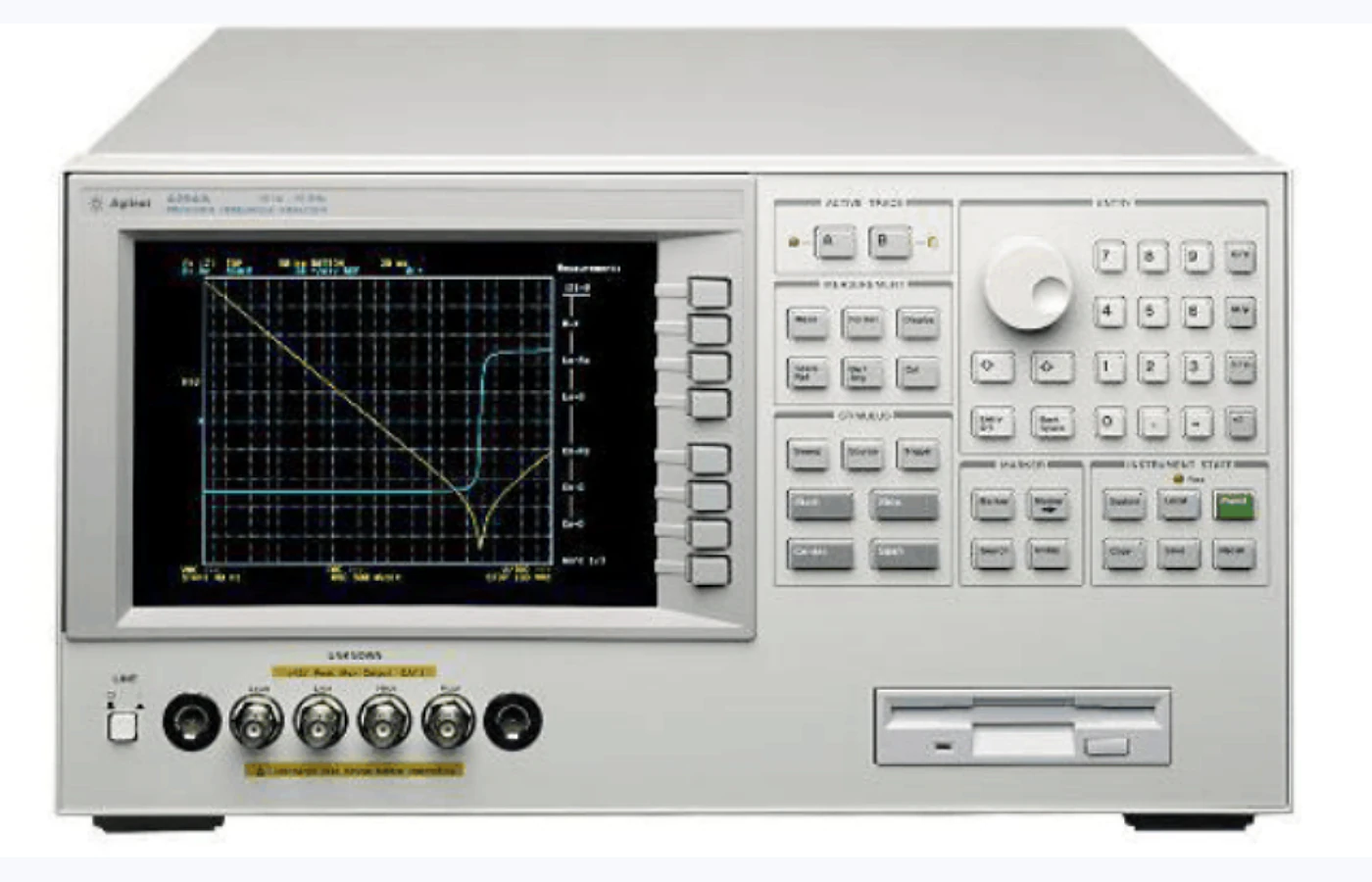
Dielectric property testing quantifies how a material stores and dissipates electrical energy. Frequency- and temperature-dependent data can reveal polarisation, relaxation, conduction and transition…
Room-temperature frequency sweep
Temperature-dependent spectroscopy
Comparative dielectric screening
Choose the scope
The method, preparation route and reporting depth depend on what you need to decide.
What are the dielectric constant and loss over the required frequency range?
Where do relaxation or transition features occur?
How do formulation, moisture or temperature change insulation performance?
Common outputs
Fields, conditions, processing and file formats are confirmed before work begins.
Relative permittivity reported with the agreed units, sample reference and measurement conditions.
Loss factor and loss tangent supplied in a labelled format suitable for direct sample or condition comparison.
AC conductivity provided with the processing basis and quality checks agreed during technical review.
Frequency and temperature response plots included when selected in the confirmed reporting scope.
Sample requirements
Provide representative, clearly labelled samples and identify the decision, feature or comparison that matters.
| Suitable sample | Submission requirement | Planning note |
|---|---|---|
| Synthetic soft material | Provide fixed, preserved or otherwise stabilised material in the agreed container and medium. | Describe the material composition and confirm preparation, temperature and disposal requirements. |
| Test coupon / specimen | Provide labelled specimens prepared to the agreed geometry, orientation and surface condition. | Confirm the applicable standard, dimensions, loading direction and number of replicates. |
| Device / assembly | Provide a complete labelled device or assembly with drawings, interfaces and operating limits. | Confirm power, connections, operating state, access restrictions and permitted disassembly. |
Objective: state the decision, comparison or acceptance criterion the work must support.
Handling and access: declare hazards, instability, confidentiality, file constraints or special logistics before dispatch or transfer.
Questions and answers
Short answers to issues that can change preparation, scope, timing or interpretation.
That depends on the fixture and material. Existing electrode material and geometry should be declared before booking.
Typical turnaround is 7 working days after sample acceptance and method confirmation.
Configure the service
A £45 service fee applies to orders under £300, excluding VAT.
Typical turnaround: 7 working days
Configure & Book